
Do Louvered Pergolas Protect Against Rain? Everything You Should Know
- Jul 6
- 9 min read
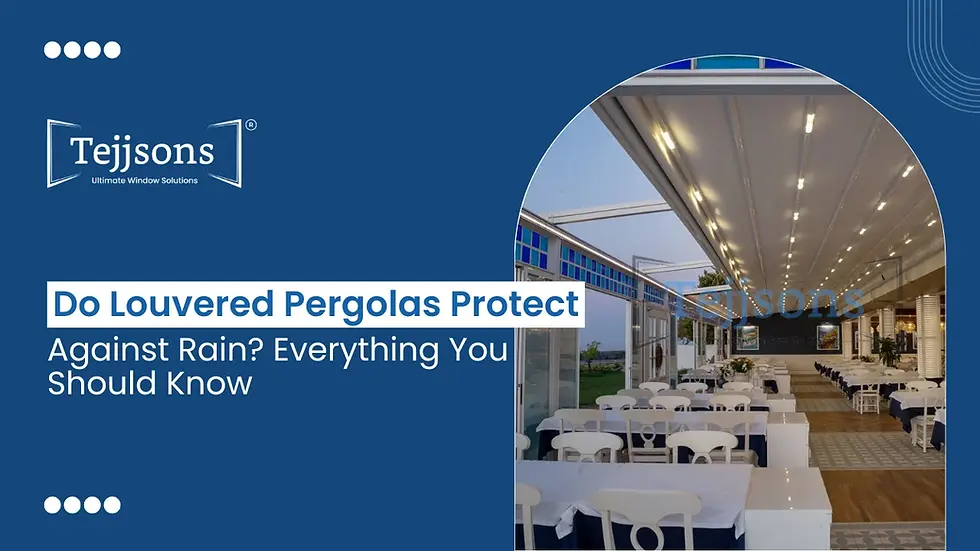
You have set the table, brought out the snacks and settled onto the terrace when the first drops begin to fall. Within minutes, everyone is carrying cushions and plates indoors.
For many homeowners, this familiar scene is what makes a such an appealing addition to an outdoor space.
Its rotating aluminium blades open to welcome sunlight and fresh air, then close when shade or rain coverage is needed. Many systems, like the ones available at Tejjsons, also include motorised controls, integrated gutters and concealed drainage, which helps gardens, terraces and restaurant patios remain usable through changing weather.
Rain protection still depends on how the complete system is built. Blade design, seals, drainage capacity, installation, and site exposure all influence its performance. Before choosing a pergola for rainy weather, it helps to understand how the roof closes, where the water travels and why some systems handle rain better than others.
Key Takeaways
A louvered pergola provides effective overhead rain protection when its blades close properly.
Integrated gutters and concealed drainage direct water away from the covered space.
Wind, blocked outlets, damaged seals and poor alignment can cause leaks.
An aluminium louvered pergola can last around 20–25 years with regular maintenance.
Site-specific planning improves performance during heavy rain and Indian monsoons.
Table of Contents
Do Louvered Pergolas Protect From Rain?
Yes, a well-designed louvered pergola provides effective overhead protection when its adjustable blades are fully closed. The louvers overlap or interlock to form a covered roof, while integrated channels carry rainwater towards gutters built into the surrounding frame.
The water then moves through concealed drainage routes inside the supporting posts and exits near ground level. The performance of this system depends on accurate blade alignment, durable seals, sufficient gutter capacity and professional installation.
Wind-driven rain may still enter through open sides, particularly on rooftops and exposed terraces. Glass panels, zip screens, or other side enclosures can provide added protection around the perimeter.
How Do Louver Systems Seal When Closed?
The blades in a louvered pergola roof rotate until their edges meet or overlap. On well-engineered bioclimatic pergola systems, their shape creates channels that move water away from the roof surface.
Depending on the product, the closed roof may use:
Overlapping blade edges
Interlocking aluminium profiles
Rubber seals or gaskets
Compression points between adjoining blades
End caps that guide water towards the perimeter
Frame channels that collect runoff
The blades must close evenly across the full roof. Even a small alignment gap can create a drip point during rain. This makes accurate fabrication and installation just as important as the blade design itself.
How Do Louvres Rotate to Provide Control?
The louvers are connected through a mechanical system that rotates them together. A manual system may use a crank, while a motorised louvered pergola operates through a switch, remote control or connected automation system.
Different blade positions support different outdoor conditions:
Fully open: Brings in direct sunlight and maximises upward ventilation.
Partially open: Creates shade while retaining airflow through the roof.
Angled: Controls the direction and amount of sunlight entering the area.
Fully closed: Forms a protective surface during rain or strong sunlight.
Some systems can connect with rain sensors that trigger roof closure when rainfall begins. The louvers should still be checked before leaving the area unattended, particularly during unstable weather.
How Does a Louvered Pergola Manage Water?

A rain-ready system guides water through a planned drainage path instead of letting it spill randomly from the roof edges.
The process usually works in four stages:
Closed louvers receive the rain: Water lands on the angled or channelled blade surfaces.
Blade channels direct runoff: The profiles carry water towards gutters around the roof frame.
Integrated gutters collect water: Perimeter channels receive runoff from across the louvered roof.
Support posts drain the water: Concealed downpipes inside selected posts carry it towards ground-level outlets.
The discharge points should direct water away from walls, foundations, doors and frequently used walkways. Roof area and local rainfall intensity should also be considered when planning gutter and outlet capacity.
Why Do Some Louvered Pergolas Leak in Rain?
Water entering beneath a pergola does not always mean the roof concept is unsuitable. It may indicate a weakness in the product specification, installation, or maintenance.
Common causes include:
Louvers that do not close completely
Poorly aligned roof blades
Gaps around end caps or frame joints
Damaged seals and gaskets
Leaves blocking gutters or outlets
Drainage capacity below local rainfall demands
Incorrect slope or frame levelling
Loose fittings after prolonged use
Wind pushing rain through open sides
Operating the blades while water remains on the roof
Occasional drops can also fall when the louvers reopen after rain. Water left on the blade surface may enter the space as the blades rotate.
Which Factors Affect Louvered Pergola Rain Protection?
The phrase rainproof pergola can describe many systems, but their performance may differ considerably. Buyers should look beyond the roof’s appearance and study the complete structure.
Important factors include:
Blade profile: Interlocking or overlapping pergola designs manage water more effectively than basic flat slats.
Drainage capacity: Gutters and outlets must suit the roof area and expected rainfall.
Structural accuracy: Correct levelling supports consistent blade closure and water movement.
Seal quality: Durable seals reduce gaps between moving and fixed components.
Wind exposure: Rooftops and open plots may experience stronger wind-driven rain.
Roof dimensions: Larger roofs collect more water and require greater drainage capacity.
Side protection: Screens or glass panels can reduce rain entering from exposed directions.
Installation quality: Incorrect joints or drainage connections can weaken the entire system.
Maintenance: Clean gutters and working motors support dependable performance.
Ask your pergola manufacturer about tested rain loads, drainage rates, wind limits and operating instructions for the proposed model.
Aluminium vs Other Materials: What Is the Best Material for Pergolas?

Aluminium is widely used for adjustable pergola systems because it combines relatively low weight with structural strength and corrosion resistance. The material also suits precision-made hollow profiles, concealed gutters and rotating blade mechanisms. The Aluminum Association identifies durability, corrosion resistance and a high strength-to-weight ratio among aluminium’s major construction benefits.
Here is how the main material choices compare:
Aluminium: Suits motorized blades, integrated drainage and low-maintenance outdoor structures & give high strength. Powder coating adds colour & surface protection
Steel: Provides high strength but adds weight. Protective coatings require close attention in wet or coastal locations.
Timber: Creates a warm, natural appearance. Regular sealing, inspection and moisture care are needed.
Vinyl or composite materials: Require limited surface maintenance but may have lower structural flexibility for large motorised roofs.
For an adjustable roof, an aluminium louvered pergola is usually the most practical choice. The alloy, profile thickness, surface finish, connections, and engineering specifications remain important parts of the decision.
Louvered Pergolas vs Fixed-Roof Pergolas for Rain Protection
Both structures can protect outdoor spaces from rainfall. The main difference lies in environmental control. A fixed roof remains permanently closed, while a pergola with adjustable roof can change between sunlight, airflow, shade, and rain coverage.
Factor | Louvered Pergola | Fixed-Roof Pergola |
Rain protection | Strong when blades are closed and properly drained | Consistent overhead coverage |
Sunlight control | Adjustable throughout the day | Limited by the fixed roof material |
Ventilation | Roof opens to release warm air | Depends on open sides |
Drainage | Integrated gutters and post outlets | Conventional gutters and downpipes |
Moving components | Requires motors, pivots or manual controls | Few moving roof parts |
Maintenance | Includes blades, gutters, seals and mechanisms | Mainly roof surface and gutters |
Design flexibility | Switches between open and covered conditions | Remains permanently covered |
Best suited for | Multi-season outdoor living | Permanent sheltered areas |
A fixed roof may suit a space that needs continuous coverage. Adjustable louvered pergolas are better suited to areas where residents want control over sunlight, airflow and rain protection.
Which Features Improve Rain Protection?
A weatherproof louvered pergola should combine roof engineering with effective drainage and site-specific installation.
Look for these features:
Interlocking or overlapping aluminium louvers
Integrated perimeter gutters
Concealed drainage inside support posts
Durable seals at roof and frame joints
Adequate outlet capacity for heavy rain
Corrosion-resistant fittings and hardware
Powder-coated aluminium profiles
Rain-sensor compatibility
Manual override for motorised controls
Optional glass panels or side screens
Accessible gutters for cleaning
Clear water discharge points
For exposed rooftops and coastal sites, wind performance and structural anchoring deserve equal attention.
How Should You Keep a Louvered Pergola Rain-Ready?
Routine care helps the roof close correctly and keeps water moving through the drainage system.
Clear the roof regularly: Remove leaves, twigs and loose debris from the louvers.
Clean the gutters: Check perimeter channels before and during the rainy season.
Inspect drain outlets: Confirm that water can move freely through the support posts.
Wash the aluminium: Use mild soap, clean water and a soft cloth or sponge.
Check the seals: Look for lifting, cracking or displacement around joints.
Test the roof movement: Open and close the louvers to identify uneven motion or unusual sounds.
Inspect the motor: Arrange professional servicing when operation becomes slow or inconsistent.
Check fasteners: Ask a technician to inspect loose fittings, especially after severe weather.
Avoid opening a wet roof immediately: Let surface water drain before rotating the blades.
Book periodic servicing: Professional inspection can identify drainage or alignment concerns early.
Are Louvered Pergolas Worth It for Indian Rain?

Yes, a louvered pergola for rainy weather can be a worthwhile investment in India, especially for terraces, gardens, rooftops, hotels and restaurant seating areas used throughout the year. The adjustable roof provides shade during hot weather, ventilation on milder days and overhead rain protection during seasonal showers.
Performance during the monsoon depends on site-specific planning. Regions with intense rainfall need high-capacity gutters, sufficient outlets and water discharge points positioned away from walls and foundations. Coastal properties also require corrosion-resistant hardware and finishes, while rooftop installations, for example,a restaurant pergola, need suitable structural anchoring for stronger wind exposure.
A well-engineered aluminium louvered pergola gives homeowners and businesses greater control over outdoor spaces across changing weather conditions. Side screens or glass panels may be added in locations exposed to wind-driven rain.
How Long Do Louvered Pergolas Last?
A quality aluminium louvered pergola can typically last around 20 to 25 years with proper installation and regular maintenance. The actual lifespan depends on the aluminium grade, profile thickness, surface finish, drainage design, hardware quality and exposure to rain, salt air or strong winds.
The main aluminium structure generally lasts longer than its moving components. Motors, seals, pivot mechanisms and electrical parts may require servicing or replacement during the pergola’s working life. Regular gutter cleaning, surface washing and timely mechanical checks can keep the roof operating correctly for many years.
Final Thoughts
The best outdoor spaces feel ready for every part of the day. Morning sunlight, afternoon shade, evening ventilation and sudden rain can all be managed through one louvered pergola. Its adjustable roof helps a terrace, garden or rooftop remain comfortable for family meals, quiet breaks and social gatherings across changing seasons.
Strong rain protection comes from the details beneath the design. Interlocking blades, concealed gutters, clear drainage routes and precise installation help an aluminium louvered pergola manage water while maintaining a clean architectural appearance. Local rainfall, wind exposure, and side protection should also guide the final configuration.
At Tejjsons, we create custom motorized bioclimatic pergolas for homes, hotels, restaurants and commercial projects across India. Each system is planned around the site, space and expected weather conditions, bringing greater comfort and flexibility to outdoor living. Make every season part of your outdoor experience. Contact Tejjsons today to plan your custom louvered pergola.
FAQs
Can heavy rain damage a louvered pergola?
A quality motorised louvered pergola can handle heavy rain within its specified performance limits. Clear gutters, secure anchoring and regular inspections support dependable performance during the monsoon.
Do louvered pergolas protect from rain?
Yes. Effective louvered pergola protect from rain because it comes from closed blades, integrated gutters and concealed drainage. A rainproof pergola mainly manages overhead rainfall, while side screens can reduce wind-driven rain.
Are louvered roofs worth it?
Yes ,louvered pergola can be a worthwhile investment for frequently used terraces, gardens and hospitality spaces. It provides flexible control over sunlight, airflow, shade and rain coverage.
Do louvered pergolas leak?
The performance of a waterproof louvered pergola depends on blade alignment, seals, drainage and installation. Blocked outlets, damaged seals and wind-driven rain are common sources of water entry.
What is the difference between a traditional pergola and a louvered pergola?
A traditional pergola generally has an open-beam or fixed roof. A louvered pergola uses rotating blades to control sunlight, ventilation, shade and rain protection.
Are louvered pergola roofs expensive?
Yes, An aluminum pergola with a louvered roof generally costs more than a basic pergola. Size, motorization, drainage, finish, side enclosures and installation conditions influence the final price.
Do louvered pergolas break easily?
No. A well-built louvered pergola is designed for regular use and changing weather. Structural engineering, hardware quality, secure anchoring and periodic servicing influence its durability.
Do I need permission to install a louvered pergola in my garden?
Permission for a louvered pergola depends on local building rules ,specific location , its dimensions, fixing method and property type. Your housing society or resident association may also require prior approval.


Comments