
7 Types of Windows for Modern Homes: Styles and Best Uses

Nobody ponders over a window too deeply when it works well. You only notice it when the shutter hits the curtains, the track fills with rainwater, or the room still feels stuffy despite having a large opening.
These problems often begin with choosing a window for its appearance alone. A casement window that works beautifully in a bedroom may become a nuisance beside a narrow passage. A fixed pane can frame the garden perfectly, but it cannot bring fresh air into the room. No matter the window design , it's going to have some benefits and drawbacks that need to be thought about.
Depending on your choice from the many different types of windows available, you'll be able to change how a home feels and functions every day. Knowing where each style works best can prevent mistakes that are difficult and expensive to correct later.
Key Takeaways
No single window type suits every room.
Sliding windows save space, while casement windows improve airflow.
Specialised systems suit large, high, or feature openings.
Frame strength, glass, hardware, and installation affect performance.
A planned mix of window types creates a more practical home.
Table of Contents
Why Window Choice Matters for Modern Homes
Modern homes often use larger panes and slimmer frames to bring in more daylight and keep views open. As the glass becomes larger, the window needs stronger profiles, better hardware, accurate fabrication, and careful installation.
Window style also changes how a room functions. A sliding window saves space beside a sofa or kitchen counter. A casement window opens wider for ventilation. A motorised window makes a high or hard-to-reach opening easier to operate.
The best windows for a home should be selected around:
The ventilation needed in the room
Sun, rain, wind, dust, and noise exposure
The size and weight of the glass
Indoor and outdoor opening space
Cleaning and maintenance access
Safety and security requirements
The proportions of the elevation
Using a planned mix of window types for homes usually works better than repeating one style throughout the property.
7 Types of Windows for Modern Homes
The following 7 types of windows suit different room layouts, opening sizes, and architectural styles.
1. Sliding Windows
Sliding windows have two or more panels that move horizontally along tracks. The panels remain within the frame, so they do not take up space inside or outside the room. Tejjsons creates minimal sliding window systems for larger openings and slimmer sightlines.
Sliding windows work well in rooms where a hinged shutter would interfere with furniture, curtains, balconies, or walkways.
Best used in: Living rooms, bedrooms, balconies, kitchens, and compact spaces.
What to check: Panel weight, roller capacity, interlocks, track drainage, locking points, and cleaning access.
Sliding windows are among the most practical windows for houses in India, particularly in apartments and rooms with limited opening space.
2. Casement Windows

Casement windows have a sash attached to side hinges. The sash swings inward or outward, depending on the system. When closed, it presses against gaskets fitted around the frame.
The wide opening makes casement windows useful where stronger airflow is needed. The sash can also catch a breeze approaching from the side and direct it into the room.
Best used in: Bedrooms, kitchens, studies, bathrooms, and exposed external openings.
What to check: Swing clearance, hinge capacity, shutter size, glass weight, restrictors, locks, and gasket compression.
Aluminium casement windows suit several architectural styles. Sturdy aluminium frames keep familiar design consistent with other modern window styles used across the home.
3. Magnetic Levitation Windows
Magnetic levitation windows are a specialised type of sliding window developed by Tejjsons. The system uses proprietary magnetic technology instead of conventional rollers and reduces mechanical contact as the panel moves.
This movement system suits large glazed openings where smooth, quiet operation is central to the design.
Best used in: Luxury living rooms, high-rise apartments, large garden-facing openings, hotels, and premium commercial spaces.
What to check: Opening dimensions, glass weight, locking, drainage, controls, installation accuracy, and service support.
When comparing types of windows for a house, magnetic levitation systems suit large glazed openings that need smoother movement than basic sliding hardware can provide.
4. Arched Windows
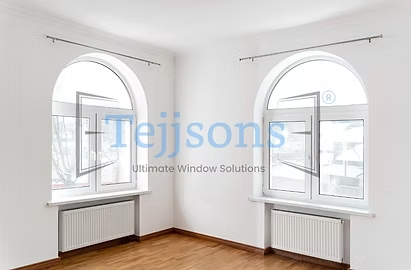
Arched windows have a curved top instead of a straight horizontal head. The curve may be low and wide, semicircular, or tall and narrow to suit the building.
The window can be fixed or combined with an openable section. When aluminium profiles are used, they prevent the curved form from becoming visually heavy.
Best used in: Villas, bungalows, entrance halls, staircases, bedrooms, and feature elevations.
What to check: The shape of the opening, profile bending, curved glass where required, frame divisions, waterproofing, and installation accuracy.
Aluminium Arched windows can work with classical or modern architecture. The finish, frame width, and surrounding details determine whether they feel traditional or contemporary.
5. Guillotine Windows
Guillotine windows, also known as vertical sliding windows, have panels that move vertically within the frame. The moving section rises to clear the opening instead of sliding sideways or swinging outward.
This vertical action is useful when a counter, wall, or narrow elevation leaves little space for another opening style. Larger glass panels may use powered operation, depending on the selected system.
Best used in: Kitchens, bars, cafés, restaurants, terraces, serving counters, and entertainment areas.
What to check: Panel balance, motor and control system where used, safety sensors, seals, drainage, power supply, and service access.
Guillotine windows are distinctive window styles for spaces that need a broad opening without stacking panels at the sides.
6. Slimline Windows

Ultra-slim windows use narrow visible aluminium sections and larger glass panels to keep the view as open as possible. Unlike casement or sliding, “ultra-slim” describes the frame design rather than one opening mechanism. The window may be fixed or sliding, based on the system.
The reduced frame width works particularly well in rooms where the garden, skyline, or surrounding landscape is an important part of the interior.
Best used in: Living rooms, bedrooms, villas, premium apartments, garden-facing spaces, and floor-to-ceiling glazed openings.
What to check: Visible frame width, profile strength, panel dimensions, glass weight, wind pressure, interlocks, drainage, hardware, and installation limits.
Slimline aluminium windows are among the most popular modern window styles for homes that need larger glass surfaces without bulky frames.
7. Georgian Bar Windows

Georgian bar windows feature bars arranged across the glass to create a balanced grid pattern. The bars add intricate detail to a plain glazed opening and can make broad panes feel better proportioned.
The grid can be designed around the size of the window, the shape of the elevation, and the architectural style of the home. Consistent spacing is important when several Georgian bar windows appear across the same façade.
Best used in: Villas, bungalows, farmhouses, entrance halls, bedrooms, and homes with classical or transitional architecture.
What to check: Bar thickness, grid spacing, colour, alignment across adjoining windows, glass specification, and compatibility with the opening style.
Georgian bar windows can also work with modern window styles when the grid is simple, the profiles are slim, and the finish matches the rest of the elevation.
Window type | How it opens | Best suited to |
Sliding Windows | Moves horizontally | Compact rooms, balconies, and wide views |
Casement Windows | Swings on side hinges | Bedrooms, kitchens, and exposed openings |
Magnetic levitation Windows | Glides through a magnetic movement system | Large premium openings for commercial purposes |
Arched Windows | Fixed or openable | Villas, entrances, and feature elevations |
Guillotine Windows | Moves vertically | Counters, cafés, bars, and terraces |
Slimline Windows | Narrow visible aluminium profiles with larger glass panels | Living rooms, bedrooms, and large view-facing openings |
Georgian bar Windows | Fixed or openable, based on the window design | Villas, bedrooms, entrances, and feature elevations |
Frame Materials That Complement Modern Window Styles
The right material for window frames depends on the opening size, glass weight, climate, maintenance needs, and architectural style. Take a look at the frame materials with their suitable applications & main considerations.
Frame material | Suitable applications | Main considerations |
Aluminium | Suitable for large panes, slim frames, curved windows, and specialised systems | Has profile strength, made with finish hardware, thermal break, and installation |
uPVC | Suitable for standard residential openings | Reinforcement, panel size limits, colour stability, and profile quality |
Wood | Suitable for traditional homes and warm interiors | Timber species, moisture protection, painting, and regular upkeep |
Aluminium-clad wood | Suitable for premium spaces seeking timber inside and aluminium outside | Joint design, drainage, maintenance, and supplier support |
When comparing window types and materials, aluminium is well suited to modern homes because its strength supports narrow frames, large glass panels, curved forms, and specialised hardware. Unlike wood, it doesn't warp or rot, and when we compare aluminium windows with uPVC ,aluminum is sturdier without the added bulk.
The choice of material should be as per the size and operation of the window. A compact casement window and a wide motorised slider demand very different things from a frame.
You can Also Read Our Comparison Guide: Aluminium Windows vs Wooden Windows: Which One Is Best for Your Home
How to Choose the Right Window Type for a Home's Architecture
The right window styles should make sense from inside the room and across the exterior elevation.
Start with the room's function. Bedrooms need ventilation and privacy, kitchens need easy operation, and living rooms often benefit from larger views.
Check the proportions. Tall openings, broad openings, and arches each need different frame divisions.
Study the orientation. West-facing glass needs stronger solar control, while monsoon-facing windows need dependable sealing and drainage.
Measure the opening space. Casement shutters need swing clearance, slide-and-fold panels need stacking space, and guillotine windows need clear vertical movement.
Choose the glass early. Safety, heat control, sound reduction, privacy, and glass weight affect the profiles and hardware.
Plan cleaning access. Large fixed panes and upper-floor exterior glass need a safe cleaning method.
Plan power where required. Powered guillotine windows and other motorised windows need electrical points, controls, sensors, and service access.
Keep the elevation consistent. A limited set of finishes, frame depths, and sightlines can connect different types of windows across the house.
A practical window schedule may use sliding windows in the living room, casement windows in bedrooms, an arched window along the staircase, and a motorised system in a double-height space. Each choice should respond to the opening instead of following one rule for the entire property.
You May Also Read : 5 Tips To Choose The Right Aluminum Windows & Doors
Common Mistakes When Choosing Windows for a Modern Home
Avoid these mistakes when selecting windows for home projects:
Using the same style in every room: Ventilation, privacy, views, and access change across the house.
Making openable panels too large: Oversized shutters and sliders place extra load on hinges, rollers, locks, and frames.
Ignoring furniture and curtains: Open shutters or folded panels may clash with beds, desks, blinds, and walkways.
Selecting glass after the frame: Glass thickness and composition affect weight, safety, heat gain, noise control, and hardware.
Choosing the thinnest frame without checking capacity: Slim profiles still need to handle wind pressure and glass weight safely.
Forgetting drainage: Tracks, sills, weep holes, and wall joints need a clear route for rainwater.
Adding motorisation late: Powered windows need planned wiring, controls, sensors, and service access.
Overlooking cleaning: High, fixed, and oversized panes may need specialist exterior access.
Comparing quotations only by area: The profiles, glass, hardware, finish, installation, and warranty may not be equivalent.
The best windows fit the room, operate comfortably, and remain practical to maintain. Appearance matters, but it cannot correct the wrong opening style or poor installation. That's why it's crucial that you choose a trusted aluminium windows and doors manufacturer that can provide not only great windows, but also expert installation and dedicated after-sales support.
Conclusion
Different types of windows serve different purposes depending on their design, size, position, and method of operation. Some are intended to provide natural light and ventilation, while others are known for clear outdoor views, privacy, or reliable protection from changing weather conditions. Their design can also affect energy efficiency, safety, ease of maintenance, and the overall appearance of a building.
At Tejjsons, we design and manufacture custom aluminium windows and doors for luxury homes, villas, premium apartments, hotels, offices, and architectural projects across India. Our team studies each opening before selecting the profiles, glass, hardware, finish, drainage, and operating system. Contact Tejjsons to choose the right window types for your project or get a quote today!
Frequently Asked Questions
Which window type is best for Indian summers and monsoons?
Casement windows are a strong choice for exposed rooms because the sash closes firmly against compression gaskets. Sliding windows also work well when they have effective interlocks and clear drainage paths. The best windows for houses in India depend on the direction of the sun, rain, and wind, along with the glass specification.
Which window type is most energy-efficient?
Fixed windows are generally the most airtight because they have no opening joints. Among openable types of windows, casement systems can provide good sealing through compression gaskets and multipoint locks. Glass, frame construction, and installation also affect energy performance.
Which window type provides the best security?
Fixed windows provide strong security because they have no opening hardware. For an openable window, casement systems with multipoint locks, laminated glass, strong frames, and secure installation are a dependable choice.
What are the different types of windows?
Some of the most popular types of windows are sliding, casement, magnetic levitation, arched, guillotine, motorised, and Georgian bar windows. Other common window types for homes include fixed, awning, tilt-and-turn, pivot, and louvre windows.
What's the difference between casement and sliding windows?
Casement windows swing open on side hinges, while sliding windows move horizontally along tracks. Casement windows create a wider open area for ventilation. Sliding windows stay within the frame and need no swing clearance.
Which type of window is more expensive?
Motorised, vertical sliding windows, and large slide-and-fold windows usually cost more because they need specialised hardware, controls, fabrication, and installation. Large minimal sliding windows and custom arched windows may also cost more than standard casement or sliding designs.
Do fixed windows provide ventilation?
No, fixed windows do not provide ventilation because the glass does not open. They can be combined with casement, sliding, guillotine, or motorised sections when a room needs clear views and fresh air.


Comments