
French Window Designs: Types, Cost & Maintenance Guide 2027

You can tell a lot about a home by where the sunlight hits the floor at 9 a.m. With French windows, you open the centre shutters, and the barrier between your living space and the garden or balcony disappears. Keep them shut, and the tall glass still pulls in plenty of daylight while giving the room a sense of height.
Of course, that easy indoor-outdoor flow disappears the moment a shutter hits your furniture, catches a strong breeze, or floods the room with harsh afternoon glare. Pulling off French windows isn't as easy as choosing a pretty frame. The swing direction, glass, hardware, and surrounding room layout all have to fit the way you actually use the space.
This guide covers the main French window designs, their materials, glass choices, prices, benefits and maintenance needs for Indian homes in 2027.
Key Takeaways
French windows use two hinged shutters that open from the centre.
Aluminium suits tall panels, slim frames, and large glass sections.
Glass should match the room’s heat, noise, safety, and privacy needs.
Shutter clearance, wind exposure, hardware, and sealing affect daily use.
Regular cleaning and hardware checks help prevent early wear.
Table of Contents
What Are French Windows?
A French window is a popular type of casement window with two side-hinged shutters that meet in the centre. Both shutters open to create a wide opening, unlike a standard single casement window.
Traditional French style windows often use tall glass panes, symmetrical frames, and decorative bars. Modern versions keep the balanced proportions but use slim aluminium profiles, larger glass panels, and multipoint locks.
A French window is usually installed above floor level with a sill. When the same design extends to the floor and provides access to a balcony, patio, or garden, it may be described as a French door. Some systems use a floating mullion attached to one shutter. Once both shutters are open, no permanent vertical bar remains in the centre.
French Window vs Fixed Window vs Sliding Window

French, fixed, and sliding windows differ in operation, ventilation, space requirements, and cost. This comparison can help you decide which design suits each room.
Feature | French Window | Fixed Window | Sliding Window |
Operation | Two hinged shutters | Does not open | Panels slide along tracks |
Ventilation | Wide opening | None | Partial opening |
Space needed | Requires swing clearance | No clearance needed | No swing clearance needed |
View | Clear centre with a floating mullion | Uninterrupted glass | Visible panel interlocks |
Best for | Bedrooms and living rooms | View-focused spaces | Compact rooms and balconies |
In a Nutshell: French window designs suit rooms that need strong ventilation and symmetry. Fixed windows prioritise daylight and views, while sliding windows work well where space is limited.
Take a Deeper Look: Casement vs Fixed Windows: Key Differences Every Homeowner Should Know
Types of French Window Designs
The term "French window" covers several configurations. Each one changes how the window looks, opens, and fits within the architecture.
1. Classic Double-Casement French Windows

This is the most recognisable French window design. Two equal shutters meet at the centre and open inward or outward. Classic double-aluminium casement windows suit formal living rooms, bedrooms, and façades built around balanced proportions. Clear glass keeps the appearance simple, while glazing bars can create a more traditional character.
2. Motorised French Windows
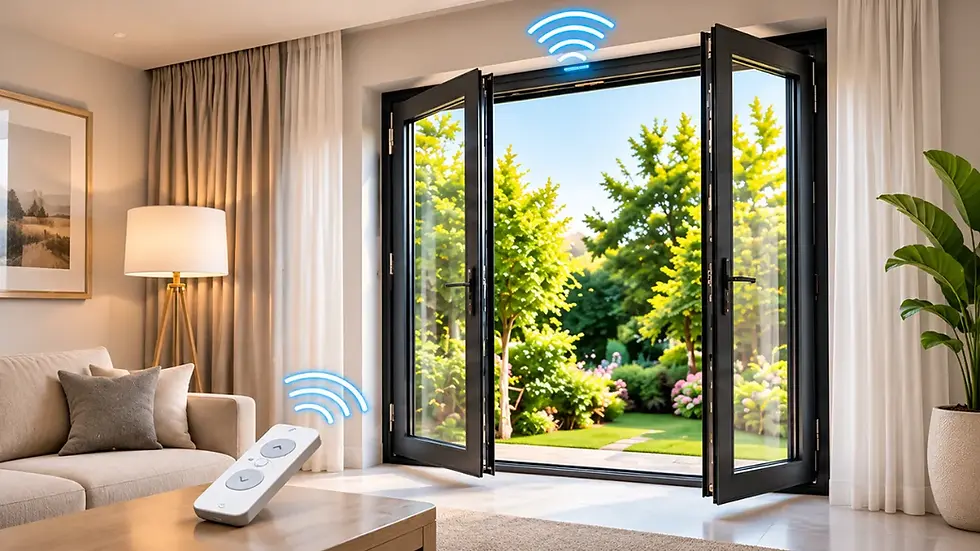
Motorised systems bring greater convenience to modern French windows, especially across tall, heavy, or difficult-to-reach openings. Electric actuators of these motorised windows open and close the shutters through a wall switch, remote, or home automation system.
The motor, hinges, controls, and power supply must be planned before the French window installation begins. Manual override and obstacle detection should also be discussed at this stage.
3. Full-Height French Windows

Full-height French window designs extend close to the floor and can visually increase the room’s height. They are commonly used in living rooms, bedrooms, and spaces facing a balcony or garden. If the opening provides regular access, the sill and threshold need careful planning. Safety glass is also important because the glazing sits close to floor level.
4. French Windows with Fixed Sidelights

Fixed glass panels can be placed beside the two openable shutters. This configuration suits wide walls where a standard pair would look too small.
The centre shutters provide ventilation, while the sidelights bring in more daylight. The fixed sections also reduce the weight placed on the hinges compared with using unusually wide openable panels.
5. French Windows with a Top Light

A fixed or openable top light sits above the main French window. It adds height without increasing the size and weight of the two shutters.
This design works well in rooms with high ceilings, stair landings, and traditional façades. An openable top light can provide ventilation without opening the main shutters.
6. Georgian Bar French Windows

Georgian bars divide the glass visually into smaller sections. The bars may sit on the glass surface, between the panes of a double-glazed unit, or form part of a true divided-light construction.
The Georgian bar window style suits classical, colonial, and transitional homes. The bar width and spacing should match the proportions of the façade instead of being added as decoration without reference to the architecture.
7. Arched French Windows

Arched French windows use a curved top to soften a rectangular façade. The arch may form part of the openable shutters or sit above them as a fixed glazed panel.
These windows require precise measurement and fabrication. They suit entrance halls, formal rooms, villas, and homes with arched doors or repeated curved details.
Glass Options for French Windows
Tall shutters need window glass selected for safety, heat, noise, privacy, and panel weight. The best choice depends on where the window faces and how the room is used. Given below some French window glass options.
Clear toughened glass: Suits rooms that need open views and strong daylight. Toughened glass breaks into small granules after a severe impact.
Laminated glass: Holds together after breakage because an interlayer sits between the panes. It is useful for security, safety, and noise control.
Double-glazed glass: Uses two panes separated by a sealed cavity. It can improve thermal and acoustic performance when the frame and seals match the glazing specification.
Low-E glass: Controls radiant heat transfer while preserving daylight. It suits air-conditioned rooms and sun-exposed façades.
Tinted glass: Reduces glare and solar heat, though darker shades can change the colour of daylight indoors.
Frosted or textured glass: Provides privacy for bathrooms, bedrooms, and windows facing neighbouring properties.
Smart windows glass: Changes from transparent to frosted through electrical control. It provides adjustable privacy for bedrooms, bathrooms, and home offices.
Large or low-level panels may require toughened or laminated safety glass. The frame, hinges, and hardware must also support the total glass weight.
What Materials Are Used for French Windows

French windows are commonly made from aluminium, timber, uPVC, or composite frames. Each material affects the profile size, maintenance, finish, and service life.
Aluminium works well for tall shutters and wide glass panels because the frames stay slim without losing strength. Powder-coated finishes give you plenty of colour options while protecting the frames from weather and scratches. For busy Indian homes, it also handles daily use with barely any upkeep.
Timber brings natural grain and traditional character. It needs periodic sealing, painting, or polishing to manage moisture, sunlight, and pests.
uPVC has good thermal properties and needs basic cleaning. Its profiles are generally broader than aluminium, which can reduce the visible glass area.
Composite frames combine two or more materials, such as timber inside and aluminium outside. They can provide strong thermal performance but usually sit at a higher price point.
For our custom French window designs, we use aluminium because it supports slim profiles, tall panels, varied finishes, and dependable hardware.
To Know More, explore a detailed comparision : Aluminium Windows vs uPVC: Which is the Better Choice for Modern Homes?
What are the Top Benefits of French Windows
The benefits of French windows come from their two-shutter construction and tall glass proportions.
Wider ventilation: Both shutters can open when the room needs stronger airflow.
More daylight: Tall glass panels help daylight reach further into the room.
Clearer centre opening: A floating mullion can remove the permanent vertical obstruction once both shutters are open.
Balanced appearance: Equal shutters create symmetry on interior and exterior elevations.
Flexible glass selection: Clear, tinted, laminated, Low-E, frosted, and double-glazed units can be specified around the room.
Connection with outdoor spaces: Full-height designs work well beside balconies, gardens, patios, and terraces.
Strong sealing: Quality casement hardware pulls the shutters against compression gaskets when closed.
Their main limitation is swing clearance. Curtains, furniture, balcony railings, plants, and exterior pathways must stay clear of the shutters.
What is the Price of French Windows in India
For 2027 budgeting, aluminium French windows cost roughly ₹1,200 to ₹3,200+ per sq ft in India. This is an indicative planning range based on recently published Indian prices. Custom profiles, large shutters, acoustic glass, Low-E double glazing, special finishes, and imported hardware can take the final rate higher.
The quotation may change based on several factors:
Aluminium profile series and frame depth
Window dimensions and shutter weight
Single, laminated, or double glazing
Powder-coated, anodised, or wood-finish surfaces
Standard or multipoint locking hardware
Mosquito mesh requirements
Floating mullion or fixed centre mullion
Site access and lifting requirements
Perimeter sealing and waterproofing
GST, transport, and installation scope
A low per-square-foot rate may exclude glass, hardware, transport, installation, or civil work. When looking for your ideal aluminium window and door manufacturers in India, compare itemised quotations with the same frame, glass, finish, and hardware specifications.
How to Choose the Best French Window Design

The best design should suit the room before it suits a reference image.
Consider these steps before approving the window schedule:
Check the shutter swing: Confirm that the panels will not strike curtains, furniture, balcony railings, or exterior walls.
Study the wind exposure: Large outward-opening shutters need suitable stays, hinges, and restrictors in windy locations.
Match the glass to the room: Use laminated glass for security and noise control, Low-E glass for solar exposure, and frosted glass where privacy matters.
Keep shutter sizes practical: Dividing an oversized opening into openable and fixed sections can reduce stress on the hinges.
Review the centre profile: A floating mullion creates a clearer opening, while a fixed mullion keeps a vertical frame member in place.
Check water management: Gaskets, drainage paths, sill design, and perimeter sealing matter during Indian monsoons.
Specify the hardware: Large shutters need hinges, handles, locks, and stays rated for their dimensions and weight.
Plan the mesh early: A mosquito mesh can change the frame depth, operation, and appearance.
Coordinate the finish: The frame colour should work with the façade, flooring, furniture, and nearby doors.
Confirm the installation scope: The quote should cover anchoring, alignment, sealing, waterproofing, and post-installation adjustment.
A suitable French window design in India needs to manage heat, rain, dust, insects, and strong seasonal winds alongside appearance.
Maintenance and Care of French Windows
Regular care keeps the shutters aligned and protects the hardware, seals, and finish. Here's how to care for your French windows:
Clean the Frames: Use mild soap, water, and a soft cloth. Avoid harsh chemicals and abrasive pads.
Clear Dust and Debris: Clean the corners, drainage slots, gaskets, and sill.
Wash the Glass Safely: Use a non-abrasive cleaner. Avoid blades on coated, tinted, or laminated glass.
Check the Hardware: Inspect handles, locks, stays, and hinges for looseness or uneven movement.
Lubricate Moving Parts: Use a lubricant recommended for the hardware. Avoid heavy grease.
Inspect the Sealant: Check for cracks, gaps, or separation before the monsoon.
Replace Worn Gaskets: Change gaskets that have hardened, torn, or lost their shape.
Avoid Forcing the Shutters: Repair dropped or misaligned panels before using them again.
A professional inspection is sensible when the shutters scrape the frame, water enters during rain, the handle becomes stiff, or the glass unit develops condensation between its panes.
Conclusion
Well-planned French window designs bring daylight, ventilation, and symmetry into a room without ignoring daily use. The right result depends on practical details such as shutter clearance, wind exposure, glass weight, seals, drainage, and hardware.
At Tejjsons, we have spent over 25 years manufacturing custom aluminium windows and doors for villas, premium homes, apartments, and architectural projects. Our team handles system selection, custom manufacturing, installation, and after-sales support. We design each French window around the opening size, room use, glass specification, and architecture of the home.
Planning French windows for your home? Get a quote based on your opening sizes and preferred glass specification.
FAQs
What is a French style window?
A French style window has two side-hinged shutters that meet at the centre and open away from each other. It usually features tall glass panels, balanced proportions, and either a fixed or floating centre mullion.
Are French windows more expensive?
Yes, French windows generally cost more than basic fixed or sliding windows with comparable dimensions. Two openable shutters, additional hinges, locking hardware, larger glass panels, and precise alignment increase the price.
What is the standard size of a French window?
There is no single standard size for a French window. The dimensions depend on the wall opening, shutter weight, glass thickness, profile system, wind exposure, and available swing clearance.
What is the difference between a French window and a normal window?
A French window uses two tall hinged shutters that meet at the centre, while a standard window may have one shutter, sliding panels, or a fixed pane. Opening both French shutters creates a broader opening and a more symmetrical appearance.
Can a French window be sliding?
A traditional French window is hinged, not sliding. The term sliding French window usually describes a sliding system with French-style proportions, divided glass, or a central meeting point rather than a true French opening mechanism.
Which glass is best for a French window?
Toughened or laminated glass is a strong choice for most French windows. Laminated glass suits security and noise control, while Low-E double glazing works better for sun-exposed, air-conditioned rooms.
Which material is best for French windows?
Aluminium is one of the best materials for modern French windows because it supports tall shutters, narrow profiles, large glass panels, and durable finishes. Timber suits traditional interiors but needs more maintenance, while uPVC generally uses broader profiles.
Are French windows energy efficient?
Yes, French windows can be energy efficient when they use suitable glazing, compression gaskets, tight locks, and well-sealed frames. Thermally broken aluminium and Low-E double glazing can further reduce heat transfer.
Are French windows good for bedrooms and small homes?
Yes, French windows can work well in bedrooms and small homes if there is enough space for the shutters to open. In tight rooms, outward-opening panels or a sliding window may use the available space more effectively.
What is the lifespan of French windows?
Well-made aluminium French windows can remain serviceable for 20 to 30 years or longer. The finish, hardware, glass seals, installation quality, exposure, and maintenance affect their actual lifespan.


